Showing posts with label celebrity. Show all posts

Integrating Public Health Content Into Media Coverage of Celebrity DUIs

Amanda Bynes is just the latest young female celebrity to be arrested for driving under the influence (DUI).  The media coverage has been extensive, with some outlets even raising the question, "Is she the next Lindsay Lohan?"  A fellow former child star, Lindsay Lohan has consistently been in the news the past 5 years with DUI arrests, rehab stints, and poor career decisions.  However, just a few weeks ago we heard the good news that she has been taken off probation from her DUI case...so hopefully things are looking up.

Pop Health has written about related issues in the past:  how soon is too soon to find a teachable moment in a celebrity DUI deathHow does popular media help establish the public health agenda? How does media coverage of public health issues (e.g., suicide) affect the public's health?

So now let's put the pieces together and discuss the work of public health researchers that focuses specifically on media coverage of young female celebrity DUIs.  In 2009, Smith, Twum, and Gielen published "Media Coverage of Celebrity DUIs: Teachable Moments or Problematic Social Modeling?" in the journal of Alcohol & Alcoholism.  They conducted an analysis of US media coverage of four female celebrities (Michelle Rodriguez, Paris Hilton, Nicole Richie and Lindsay Lohan).  The study examined media coverage in the year after their DUI arrests (December 2005 through June 2008).  Among other things, the stories were coded for the presence of public health content (e.g., arrest, death, and injury statistics for DUI).  The authors found that the coverage was primarily focused on the individual celebrities (i.e., their legal and professional repercussions) versus broader social or public health impacts.  They recommended that future research examine both the news coverage and the comprehension and use of that content for policy and behavior change initiatives.

Coverage of a celebrity DUI has the potential to be a teachable moment, but we as public health practitioners need to take advantage of it.  We need to be monitoring pop culture news so that these teachable moments can be identified. We need to partner with journalists in order to make sure that a "public health frame" is incorporated in the development of the articles.  Most importantly, we need to continue to evaluate the media content and use that data to develop effective interventions and policy recommendations.

What do you think?
  •   What strategies/information channels do you use to stay on top of public health-pop culture news?
  •   How can the public health and journalism fields partner to take advantage of teachable moments and cover public health issues safely and effectively?

The Vaccine War: Public Health vs. The Media

A few weeks ago, I had the pleasure of speaking with Laurie Edwards, a writer and blogger who examines chronic illness, healthcare, life balance, public health history, and everything in between.  Among other topics, we talked about the role of social media and mainstream media in the vaccine debate.

So I thought of that conversation as I watched last night's re-run of PBS Frontline's special "The Vaccine War" (originally aired April 27, 2010).  I highly encourage advocates on both sides of the issue to check it out.

The piece was quite balanced with interviews on all sides.  For example, we heard from vaccine advocate Dr. Paul Offit, bioethicist Dr. Arthur Caplan, anti-vaccine advocate parents in Ashland, OR (with one of the lowest vaccine rates in the country),  Jenny McCarthy and her colleagues at Generation Rescue who continue to argue for evidence of the link between vaccines and autism, and from parents of a girl who almost died at 6 weeks from whooping cough.

It explored possible contributors to the fear of vaccines and/or the lowering vaccination rates:
  • 1998 Lancet article by Dr. Andrew Wakefield that linked autism to childhood vaccines (*This article has since been retracted and MANY U.S. and International epidemiological studies have found no scientific evidence of a causal link)
  • A new generation of parents that are too young to know the devastating effects of vaccine-preventable diseases like polio.  One interviewee used a term that I really like- "Community Recollection".  As Community Recollection of these diseases disappears, we can become complacent.
  • A false sense of security because many of these diseases are not seen frequently in the United States.  However, we forget that with the ease of air travel, borders are almost non-existent.  For example, the piece followed an outbreak of measles in San Diego that started when a non-vaccinated 7 year old from the US contracted it while vacationing in Switzerland and brought it home to classmates.
  • The Internet.  While it also offers many positive benefits regarding healthcare (e.g., access to information/publications; online support groups and connections with a "community" of individuals with similar diagnoses)- it also has its potential downfalls.
    • It can keep controversy alive- even after it has been disproven (e.g., the Wakefield article)
    • False or unproven information can go viral and it is hard to retract!  They use the example of the youtube video of Desiree Jennings (a 25 year-old Washington Redskins cheerleader) that claimed that a flu shot caused her debilitating muscle disorder.  
So how can Public Health compete with the Media and the Internet?
  • Let's not compete.  Let's collaborate.  Let's learn (either through our own capacity or collaboration) to effectively communicate public health information online.  Our biggest audience (the public) is not usually reading our peer reviewed journals or attending our annual conferences.  This is already starting to happen.  Public health organizations have active Facebook and twitter accounts, blogs, videos.  Let's keep going.  And let's train our public health colleagues/students in health communication.
  • Let's remember to share the spotlight with celebrities and other spokespeople that have influence over the public.  Like it or not, the way people get their health information and make decisions is changing.  They do not just agree with doctors or scientists.  I almost always see these debates featuring Public Health (scientist speaking in jargon) vs. Celebrity/Parent with moving emotional story about their child being injured by a vaccine.  That is hard to compete with!  Believe it or not (because we seem to only hear from Jenny McCarthy), there are also pro-vaccine celebrities.  Jennifer Garner and Kristi Yamaguchi have been flu vaccine advocates.  Jennifer Lopez and Keri Russell have been pertussis vaccine advocates.  Let's make sure the public knows that. 
  • Let's think about the framing and marketing of vaccination messages.  When the HPV vaccine is framed as a Cancer Vaccine for both boys and girls...versus an STD Vaccine for just girls/young women it is perceived very differently by the public.
Tell me what you think:
  • What can we do to change the current "Community Recollection" about vaccinations?
  • Other suggestions regarding how public health can collaborate with the media/internet sites to communicate more effectively with the public?

Lady Gaga Launches "Born This Way Foundation" To Promote Safety, Skills, and Opportunity for Young People


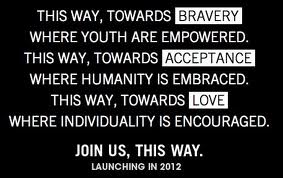
Today, in collaboration with Harvard University and other partners, Lady Gaga is officially launching her "Born This Way Foundation".  As discussed on this blog, on news outlets, and in the peer reviewed literature, bullying is a serious problem with potential connection to public health issues such as depression and suicide.  Lady Gaga has been a vocal anti-bullying advocate, and in 2011 channeled that energy into the development of a Foundation.  Lady Gaga and her mother Cynthia Germanotta, founded the Born This Way Foundation to foster a more accepting society, where differences are embraced and individuality is celebrated.

The launch is being held at Harvard University’s Sanders Theatre.  Lady Gaga and her mother will be joined on stage by Oprah Winfrey, author and speaker Deepak Chopra, U.S. Secretary of Health and Human Services Kathleen Sebelius, and esteemed Harvard Law School professor Charles Ogletree to discuss the vision of the organization, and how we can all get involved.

An academic symposium has been planned in conjunction with the launch.  The event invites researchers, policymakers, and foundation representatives to discuss ways to reach youth and promote a culture free from bullying.  I'm proud to see that my former employer, the Education Development Center, has been invited to the symposium and will share insights from their extensive research in this area.

I look forward to hearing more about the vision of the organization, because although Lady Gaga is hugely influential (at the time of this post, she had 19,773,280 followers on twitter), the strategies and tangible goals for the Foundation are not completely clear from their website.  Under their mission statement, they list three pillars of the Foundation:
  1. Safety
  2. Skills
  3. Opportunity
There is some discussion under those pillars of offering support to individuals through online communities, providing training in advocacy and community engagement, and providing opportunities to bring the national BTWF activities to the local level.  However, there are no details regarding how these strategies will actually be executed.  If you click on "Do Your Part" and "Review The Plan", it simply takes you back to the mission statement.

What strategies do you think could help BTWF support the three pillars of safety, skills, and opportunity?
What outcomes should they look at in order to evaluate the effectiveness of their efforts?

Chris Brown's Return to the Grammys: The Other Public Health Story

Sunday's Grammys were a mixture of high and low notes (pun intended), as the joy was often overshadowed by the death of Whitney Houston.  As someone who grew up in the 80's singing her songs, I too was quite shocked and saddened.  Despite broad speculation of an overdose, I'll wait to post on Whitney until we have a confirmed cause of death.

However, there was a second public health story on Sunday night.  It was the three year anniversary of Chris Brown assaulting Rihanna...and he made his return to the stage.  While Grammy executive producer Ken Ehrlich has defended the decision to bring Brown back and believes that he deserves a second chance, the warm sentiment was certainly not felt by all.  I personally turned the TV off when he began his performance.  My facebook and twitter feed blew up with comments from friends and colleagues like, "I'm no math wiz, but I'm pretty sure domestic abuser + 2 years= still a domestic abuser".  Many celebrities (both Grammy attendees and beyond) voiced the same sentiments on twitter.  For example, Wil Wheaton said simply, "everyone who apparently forgot what Chris Brown did to Rihanna should read the police report on exactly what he did."

Do you think that Chris Brown was worthy of a second chance at the Grammys? 

In addition to a discussion of giving second chances, remembering, or forgetting what he did...we must also discuss those who actually encourage what he did.  While there were outraged tweets during his performance, there were also those providing support.  The tweets that I found most disturbing were those from young women poking fun at the assault and saying that they would be happy to have it happen to them anytime.  For example, one woman said, "chris brown could beat me all he wants, he is flawless."

One of the biggest problems in our society is that we have a culture of violence where intimate partner violence is acceptable and abusers are not held responsible for their actions.     

What do you think we can do to stop the culture of violence?

In my opinion, Chris Brown is still the same angry and aggressive person that he was 3 years ago.  For example, instead of rising above and ignoring any negativity, he continues to lash out.  He took to his twitter after the ceremony to address his "haters".  He said, "HATE ALL YOU WANT BECUZ I GOT A GRAMMY Now! That's the ultimate F*** OFF!"  The tweet has since been deleted and he tried again with a slightly less offensive message.  But I don't buy it.  

For those of you interested in a more in-depth analysis of the original media coverage of the assault, I'll offer a publication.  This article was written by some fantastic colleagues at Boston University School of Public Health:

Rothman, EF, Nageswaran, A, Johnson RM, Adams, KM, Scrivens, J, Baughman, A. (in press).  U.S. tabloid magazine coverage of a celebrity dating abuse incident: Rihanna and Chris Brown.  Journal of Health Communication. Available online ahead of print.

If you or someone you know needs help, please call the National Domestic Violence Hotline at:  1-800-799-SAFE (7233)

Why Everyone is so Angry at Paula Deen- A Guest Post for "The Public's Health"

Last week I had the pleasure of being invited to guest blog on "The Public's Health". The blog is a collaboration between Drexel University School of Public Health and The Philadelphia Inquirer. In multiple posts each week, the authors highlight contemporary, historical, and ethical matters that challenge public health professionals.

For my post, I was able to contribute a "Pop Health" story which examined Paula Deen's disclosure of her type 2 diabetes and the media and societal backlash which followed.

What do you think? Do celebrities have the right to talk about their health information whenever and however they feel comfortable? Or do they have a social responsibility to disclose as early as possible- and to discuss it in a way that is most likely to improve the public's health?

Anti-vaccine ads on Delta planes; Magic and Ellen as celebrity champions for HIV/AIDS prevention...and more- What Am I Reading This Week?

New pop culture and public health stories to check out this week:

1. Darrell Hammond of Saturday Night Live fame reveals that child abuse led to alcohol/drug use and cutting. He details the horrific abuse in a new memoir, "God, If You're Not Up There, I'm F*cked".

2. Fellow Boston University School of Public Health alum Elizabeth Cohen reports on the 20th anniversary of Magic Johnson's announcement that he is HIV positive. His announcement had an incredible impact on the public's health- both in terms of reducing stigma of those diagnosed and proving that the diagnosis is not always a death sentence.

3. Delta airlines is seeing backlash from public health organizations and other flu vaccine advocates after airing a 3-minute PSA from the National Vaccine Information Center that describes alternate ways to avoid the flu (besides getting the flu shot).

4. Ellen DeGeneres is named global envoy for AIDS awareness. The hope is that Ellen's enormous platform (from both her TV show and social media channels) will allow her to reach millions of people with the prevention message. Ellen is a partner in other important public health issues, for example- bullying prevention.

5. This week, Evelyn Lauder passed away from Ovarian Cancer. Evelyn was one of the powers behind the creation of the pink ribbon campaign for breast cancer awareness.

How about you? What are you reading this week?

#NoHomos on Twitter, "50/50" looks at Cancer, Johnny Depp's Rape Comments, Chris Christie's Weight, and Steve Jobs: What Am I Reading This Week?


Whew- it has been a busy week for Pop Health! Here are the top 5 stories I've been reading:

1. Twitter is no place for #NoHomo: Should Twitter take a more proactive stance regarding hate speech that can result in trending topics?

2. "50/50"- A Hollywood movie takes on cancer: Cancer has been a theme in many movies (e.g., "Funny People") and TV shows (e.g., "The big C" on showtime)- how does this movie compare?

3. Johnny Depp offers apology for rape remarks: Depp offers an apology for comparing being chased by paparazzi to being raped. Forgivable?

4. Chris Christie's Weight- Big problem or none of our business?: Although Gov Christie has recently announced that he will not run for President in 2012, the conversation continues about his weight and its influence on his ability to be a successful Governor or President. What do you think?

5. Steve Jobs and Pancreatic Cancer: There have been many stories about the death of Steve Jobs and the contribution of pancreatic cancer to his passing. I thought Celebrity Diagnosis did a nice job of guiding readers through his diagnosis.

Please use the comment box to tell me what you think about these stories and about others that you are reading this week!

Kissing on Southwest Airlines, Over-hyped Reebok Toning Shoes and More- What Am I Reading This Week?

There are many great Pop Health (Pop Culture- Public Health) stories in the news each week, so it can be difficult to narrow down my focus for a weekly post.

Therefore, I'm starting a new feature called- "What Am I Reading This Week?" to link you to my runner-ups:

1. Reebok agrees to settlement over "over-hyped" claims that its EasyTone shoes could tone leg and butt muscles better than regular shoes.

2. Perfect for football Sunday: Cheeseheads take issue with anti-cheese billboard (from groups promoting vegan diets).

3. L-Word actress gets kicked off Southwest flight for lesbian kiss (they say it was based solely on behavior, not gender).

4. Lady Gaga wants to make bullying illegal- wants meeting with the president.

Use the comment box to tell me what you're reading this week!

Celebrities and their Health Causes: What Happens When They Do More Harm Than Good?

Often on this blog I have spoken about the role of celebrities as the spokesperson or "champion" for various public health issues. Many celebrity names are synonymous with particular health causes (Katie Couric- Colon Cancer; Michael J. Fox- Parkinson's Disease; Lance Armstrong- Testicular Cancer; to name a few).

Over the past few weeks, several stories have emerged which beg the question, "what happens if celebrities do more harm than good?" Those in the public eye have such a broad and extensive platform to communicate with the public...what if they disseminate erroneous information or even worse- cause a panic?

The week of September 12 was quite busy! In the Republican Presidential Debate (in the context of discussing mandated HPV vaccines for children), Rep. Michelle Bachmann claimed that the HPV (Human Papillomavirus) vaccine is linked to mental retardation. To support her claims, Bachmann repeatedly told the story of being approached by a woman whose daughter suffered mental retardation after taking the vaccine. As those of us in science well know, one self-reported story does not equal a true incident. Even if true, one incident does not equal a trend or an epidemic. This story has been quickly picked up by scientists who are even offering money if it is proven true.

This same week, Dr. Mehmet Oz of the Dr. Oz Show (you may remember him from numerous appearances on the Oprah Winfrey Show), claimed that apple juice contains unsafe levels of arsenic. These claims followed research conducted by the Show which had a laboratory examine three dozen samples from five different brands across the United States. The samples were compared to the limits of arsenic set for drinking water by the EPA. Since the claims, many scientists have spoken out regarding concerns about the study's protocols and conclusions (for example, not differentiating between organic and inorganic types of arsenic). Many were concerned about the widespread panic caused by these claims and likened it to shouting "fire" in a crowded theater.

Of course, this is not the first time celebrities have caused a scandal following potentially false and dangerous claims. Jenny McCarthy has dedicated her life to proving the cause between childhood vaccines and autism. Shortly after Brooke Shields released her book, "Down Came The Rain", which chronicled her battle with postpartum depression- actor Tom Cruise (a Scientologist) publicly criticized her for taking antidepressant medication.

So what happens when these celebrities cause more harm than good? What happens when their claims are misguided, misinformed, and/or not based on evidence or science? The answer: they can have huge and far-reaching public health consequences. For example, as we begin to see illnesses like measles reappear- we have to wonder- "Is this the Jenny McCarthy effect?"

"What's Your Weapon?": Billie Jean King, Arthritis Foundation, Ad Council, and USTA Launch Arthritis Campaign


Before Twitter and the U.S. Open was a flutter this afternoon with the news of Venus Williams withdrawing due to the diagnosis of the autoimmune disease- Sjogren's Syndrome, the U.S. Tennis Association was focused on another health related issue. Today the press release went out that tennis legend Billie Jean King was joining the Arthritis Foundation, the Ad Council, and the US Tennis Association (USTA) to launch a public service campaign against arthritis (the leading cause of disability in America).


The ads, launched at the U.S. Open today, feature King (who has osteoarthritis- OA) and highlight the power of movement and exercise as "weapons" in the fight against arthritis. King tells viewers "tennis is my weapon" against arthritis. The ad then asks viewers, "what is your weapon against arthritis?" and directs them to the campaign's website in order to find out: Fight Arthritis Pain. On first view, I was not terribly impressed. The brief ad (33 seconds) does not tell you very much (e.g., King says tennis is her "weapon" but nothing is said about the benefits of movement). The goal of the ad simply appears to be motivating viewers to visit the website for additional information.


The other thing that is not clear in the ad (but clarified in the press release and website) is that this campaign is targeting OA specifically. While OA is the most common type of arthritis, it is not the only type. For example, in contrast to OA which breaks down cartilage, rheumatoid arthritis (RA) (a chronic autoimmune disease) causes inflammation of the lining of the joints. Would the exercise recommendations be the same no matter what type of arthritis? I would say that distinction is unclear for viewers.


However, I did feel better when I read the press release and saw that these ads were tested in focus groups by the Ad Council. Testing your images and messages with your target population is incredibly important. It is reported that participants felt that the concept of "having a weapon" against arthritis was powerful and motivating. That is good news considering formative research by the Ad Council found that only 16% of OA sufferers surveyed felt "very confident" that they could manage their pain. Therefore, if an ad can make viewers feel empowered and confident- that is a good thing.


The press release did not describe the demographics of the focus group participants, but I am assuming they were similar to those originally surveyed (adults age 55+ with OA). If so, it would mean that Billie Jean King was an appropriate "Champion" for the cause and someone that audience admired, having watched her in the 1960s-1970s, her prime competitive years. However, I wonder if she would be the best choice for ads targeting arthritis sufferers in a younger demographic? After all, different types of arthritis can affect people of all ages. Again, this is another reason that I would have wanted to see a clearer definition of the audience for these ads. If we are focused on older adults with OA, then it is a great choice. If we are focused on people of all ages with all types of arthritis, then maybe not.


Overall, I give this campaign a "B". The impetus of the campaign is good in that it is based on research...research that shows that arthritis suffers are too sedentary and do not feel like they have control over their pain management. The campaign aims to address these barriers by empowering viewers with a "champion" who they admire and can model. The campaign also links them to a website with all the information they need about the benefits of exercise for arthritis. However, the execution of this campaign is not as strong as its foundation. It would have benefited from a more clearly defined audience and message.